SPECIALTY INSURANCE

AI Orchestration for Insurance Claims and Underwriting Exceptions

Build decision-ready cases across medical, legal, technical and policy evidence—and keep recoveries, claim actions and policy exceptions moving across the systems and people already in place.

The claims system records the claim. The decision-ready case still has to be built.

Claim state lives in the claims core, policy state in the PAS, evidence in documents, email, expert reports and the other party’s inbox. The expensive work begins when the next decision depends on what no single system holds—the chronology, the applicable wording, the missing record, the unanswered demand.
Explore applications
A medical-professional-liability, construction-defect or transactional-risk claim can run for years and accumulate hundreds or thousands of documents—treatment records, contracts, counsel reports and expert opinions stored by source and date, not by the issue being decided. Before anyone can assess causation, coverage or breach, a senior specialist reconstructs the chronology and maps the evidence to the allegation by hand. The next authority review, expert report or handover restarts the work—and the file’s meaning walks out with the last reviewer. That is days of expert time before judgment even starts.
file reviewchronologycurrent positionallegationexpert reportauthoritymaterial change

Application Explorer

Select Category
COMPLEX CASE ASSESSMENT

Turn years of clinical records into a source-linked issue assessment.

A medical professional liability claim can run for years: treatment records from multiple providers, changing allegations, adjuster notes, claimant correspondence and competing expert opinions. When a specific standard-of-care or causation issue has to be assessed, a one-time summary of the file is not enough—the question is what the evidence says about this issue.

COMPLEX CASE ASSESSMENTMedico-Legal Issue Assessment Blueprint
01Context

Build the clinical chronology around the allegation

Tie the complaint and each alleged breach of care to the treatment records, correspondence and expert opinions that bear on it.

Allegation / claim issueThe specific standard-of-care or causation question under assessment
Clinical chronologyYears of treatment history ordered by event, not by source folder
Medical records & providersTreatment notes, imaging and labs across every treating provider
Expert opinions & assumptionsMedical expert reports and the evidence each opinion rests on
Claim notes & correspondenceAdjuster notes, counsel memos and claimant or lawyer letters
Policy & coverage positionMPL wording, limits and prior coverage decisions on the claim
Missing-record requestsProvider items requested, returned partial or still unanswered
Prior decisions & authorityEarlier positions, reserves and approvals with their rationale
02Workflow

From allegation to source-linked issue assessment

The medico-legal reviewer or claims counsel retains causation, liability, reserve and settlement judgment.

  1. Allegation or authority review opens the issue
  2. Reconstruct the clinical chronology
  3. Map evidence: supports, contradicts, unknown
  4. Compare expert opinions & assumptions
  5. Request missing provider records
  6. Prepare source-linked issue assessment
  7. Medico-legal authority decides position
  8. Write decision & rationale to claim record
  9. New evidence reopens the issue, not the file
03Interaction

Specialists keep the medical judgment; the evidence comes to them

The issue assessment arrives with every statement linked to its source record, so review time goes to judgment rather than reconstruction.

People
Medico-Legal ReviewerAssesses allegation, causation and standard of care
MPL Claims SpecialistOwns claim strategy and the assessment request
Claims CounselHolds liability, reserve and settlement authority
Medical ExpertExternal opinion provider whose reports are compared, not replaced
Collaborates through
Systems & Surfaces
Claims systemClaim state, reserves, notes and diary
DMS / SharePointRecords, reports and correspondence
Email & provider portalsRecord requests and external follow-up
Legal-spend / matter toolsCounsel engagement and invoices
Talk to us about this workflow →

Built around the claims, policy and evidence estate you already run.

Orcaworks treats your claims and policy cores, DMS and document stores, legal-spend and matter tools, fraud and recovery networks, expert channels and broker portals as the authoritative sources—and writes back only through permitted, configured interfaces. Read and write access is confirmed per system during discovery, not assumed.


ADP
Anthropic
Assistly
Azure AI
Ceipal
Freshdesk
Google Gemini
HubSpot
Intercom
Microsoft Dynamics 365
Microsoft Teams
MuleSoft
OpenAI
Oracle
Outreach
Salesforce
SAP
ServiceNow
Slack
Workato
Workday
Zapier
Zendesk
Zoom
HOW ORCAWORKS FITS

Maintain the decision-ready case around the systems of record.

Orcaworks is not another claims or policy core, UW workbench, fraud platform, legal-spend tool or recovery network. It sits above the installed estate and does the case work that remains when the decision depends on evidence those systems do not hold together.
YOUR SYSTEMS STAY AUTHORITATIVE

Claims and policy cores remain the records of truth.

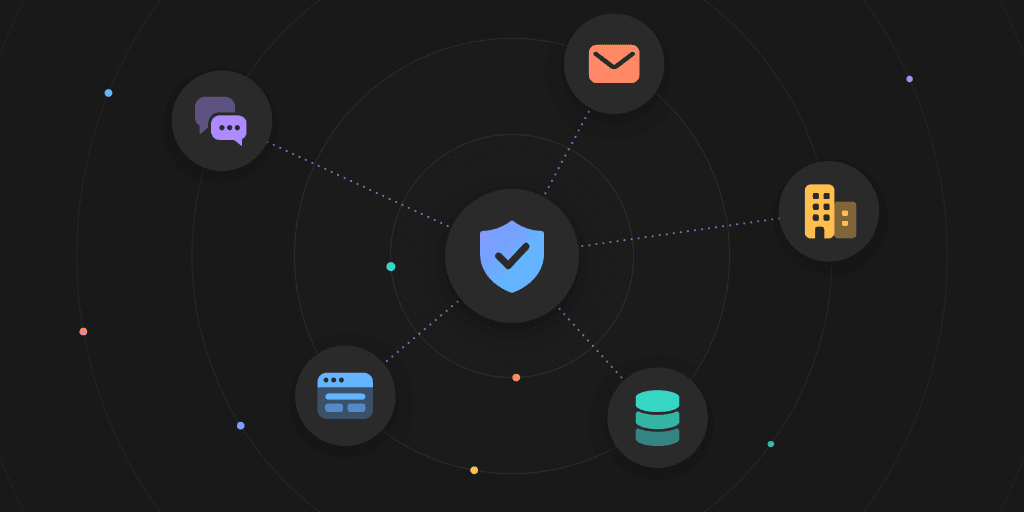
The claims system owns the claim, the PAS the policy. Orcaworks works the case around them and writes back only the authorized change—a recorded position or an issued endorsement.

A CASE AROUND THE CLAIM

Every allegation, demand and exception gets its evidence in one place.

The expert report beside the allegation. The carrier’s reply beside the demand. Orcaworks links every statement to its source and keeps fact, allegation, opinion and decision distinct.

NAMED DECISION OWNERS

Reviewers, counsel, adjusters and underwriters keep the consequential calls.

Orcaworks reconstructs, compares, requests and prepares within the authority matrix. The medico-legal reviewer decides causation, claims counsel coverage, the adjuster the next action, the underwriter the exception.

AUDIT THE DECISION

Every position keeps its evidence, authority and rationale.

Evidence used, requests sent, who held authority, what changed in the claim or policy record—retained per case so audit, reinsurance and compliance can replay why a decision moved.

INDUSTRY RESOURCES

Go deeper on specialty insurance operations.
A two-page brief for the chief claims officer or COO and a detailed guide for the claims, recovery, policy-services and underwriting leads who own the queues.
Insurance — Executive Brief
2-PAGE VERTICAL BRIEF

Insurance — Executive Brief

Why decision-ready cases and exception work persist after the claims and policy cores are in place; the eight ranked workflows from medico-legal assessment to endorsement exceptions; and how to baseline the first one.
Insurance — Use-Case Guide
USE-CASE GUIDE

Insurance — Use-Case Guide

All eight applications in operating detail: trigger, evidence, decision owner, permitted system action, incumbent boundary and workflow metric across complex case assessment and operational orchestration.
GET STARTED

Bring us one case. A medico-legal issue assessment is the usual first.

Start with a live MPL claim that needs an issue assessment, or a recovery queue with unanswered demands. We’ll baseline the review effort and show you how Orcaworks turns it into a governed workflow with a clear end state.